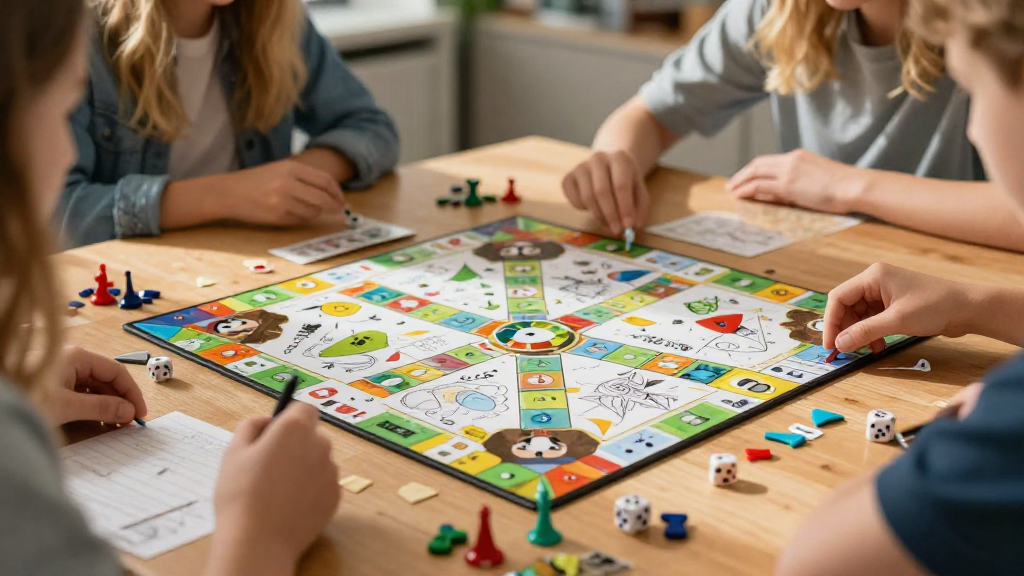
Creating a board game for class projects can be an exciting and educational experience.
In this article, we’ll explore how to make a board game for class that is not only fun to play but also serves as a valuable learning tool.
Why Should You Learn How to Make a Board Game for Class?
Making a board game for class projects can help you in several ways:
-
Enhance Creativity: Designing your own game allows you to express your creativity and think outside the box.
-
Encourage Teamwork: If you work with classmates, you’ll learn the importance of collaboration and communication.
-
Reinforce Learning: By integrating themes from your lessons, a board game can reinforce what you’ve learned in a memorable way.
-
Develop Problem-solving Skills: Creating rules and balancing gameplay requires critical thinking and problem-solving skills.
What Materials Do You Need?
Before diving into the design process, gather the essential materials.
Here’s a simple list of items you might need:
- Cardboard or cardstock: For the game board and cards.
- Markers or colored pencils: To add visuals and designs.
- Dice: For random chance elements.
- Tokens or game pieces: These can be anything from coins to small toys.
- Paper: For rules and instructions.
- Glue or tape: For assembly.
Having all your materials ready will streamline the process and make it easier to focus on how to make a board game for class.
How Should You Start Your Game Design?
The first step in how to make a board game for class is to brainstorm your game concept.
Here’s how to do it effectively:
-
Choose a Theme: Select a topic that relates to your lesson. Consider themes like history, science, or literature.
-
Decide on Game Type: Will it be a strategy game, a trivia game, or maybe a chance-based game? Decide what will engage players the most.
-
Outline the Objective: What is the goal of the game? Knowing this will help shape the gameplay and rules.
-
Think About Your Audience: Who will play this game? Ensure it’s suitable for their age, interests, and knowledge level.
What Are the Key Components of a Good Board Game?
When learning how to make a board game for class, understanding the key components will help you create a more engaging experience.
Here are the essential elements:
-
Game Board: Design a clear, attractive game board that reflects your chosen theme.
-
Game Pieces: Create or select unique pieces that players will use to navigate the board.
-
Rules: Write down clear and concise rules to explain how the game is played. Be mindful to keep the rules understandable.
-
Cards/Puzzles: If your game includes question cards or puzzles, make sure they are challenging yet fair.
-
Scoring System: Establish a way for players to keep track of their scores based on the game’s objective.
How Do You Create the Game Board?
Now that you have your materials and a concept, it’s time to create the game board.
Follow these steps:
-
Outline the Board: Use cardboard or cardstock and sketch the layout of your game board.
-
Design the Path: If your game includes a pathway, decide how players will move from start to finish.
-
Add Fun Elements: Include colorful designs, illustrations, or landmarks related to your theme to make the board engaging.
-
Test the Size: Ensure that everything is proportional and the game board is easy to navigate.
How Do You Write the Rules?
Writing the rules is a crucial part of how to make a board game for class.
Here’s a streamlined process for creating effective rules:
-
Start with the Basics:
– Outline the objective of the game.
– Describe how to set up the game. -
Explain Gameplay:
– Detail how players take turns.
– Explain the movement mechanics: How do players move? How is movement decided (e.g., dice rolls)? -
Include Special Actions:
– Are there any actions or card draws that can change the course of the game? Explain these clearly. -
Detail Scoring and Victory Conditions:
– How does a player win? Make victory conditions clear and straightforward. -
Review for Clarity:
– Ask someone unfamiliar with your game to read the rules and see if they can understand them easily.
How Do You Test Your Board Game?
Once you have created your game, it’s essential to test it before presenting it as a class project.
Testing allows you to refine gameplay and ensure it’s enjoyable. Here’s how to go about it:
-
Gather Players: Invite friends or family who can playtest your game.
-
Play a Full Game: Go through the entire game at least once, making note of any confusing rules or slow gameplay.
-
Listen and Observe: Pay attention to players’ feedback.
– What did they find fun or frustrating?
– Did the gameplay flow smoothly? -
Make Adjustments: Based on their feedback, revise any parts of the game that need improvements.
-
Test Again: After making changes, test the game again to ensure it plays well.
How Do You Present Your Board Game to Class?
As you finalize how to make a board game for class, think about how you will present it. A strong presentation will enhance your project’s impact:
-
Create a Visual Display: If possible, prepare a poster or presentation slides that showcase your game and its components.
-
Demonstrate Gameplay: Be ready to play a round with your classmates or explain the rules as you demonstrate.
-
Engage Your Audience: Ask questions, encourage participation, and be open to feedback during the presentation.
-
Reflect on Learning: Discuss what you learned through the process of creating your board game.
Conclusion
Learning how to make a board game for class can be a rewarding project that combines creativity, learning, and fun.
By following the steps outlined in this article, you can confidently embark on your board game creation journey.
Remember that the ultimate goal is not just to create a game but to foster an enjoyable learning experience for everyone involved.
So gather your materials, unleash your creativity, and enjoy the process of making your class project a game to remember!
