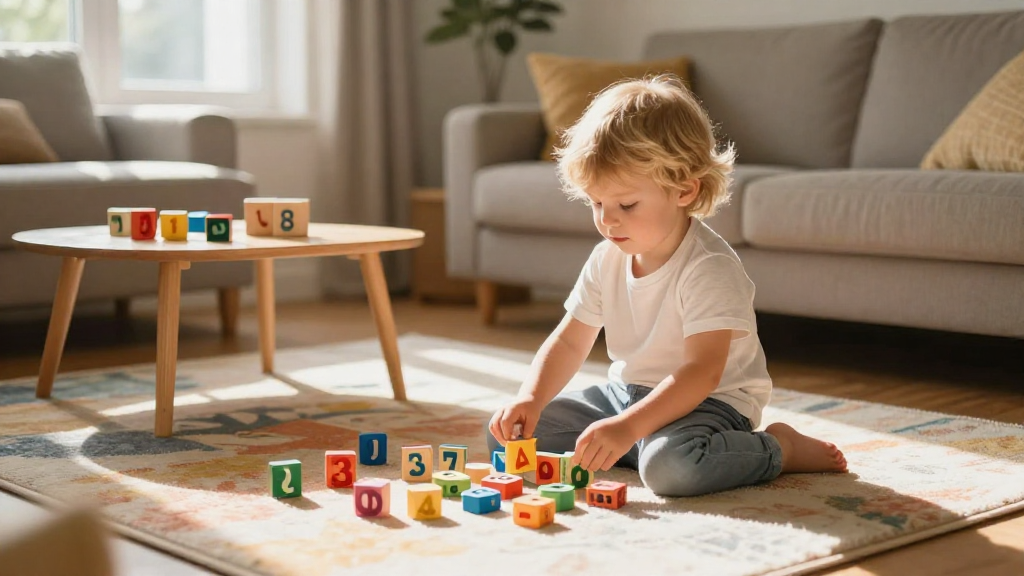
Playing number games is a fantastic way to engage children in mathematical learning while promoting creativity and critical thinking.
In this article, we’ll explore various techniques and games that will teach you how to play number games with kids effectively.
Why Are Number Games Important?
Number games are more than just fun; they serve several educational purposes:
-
Cognitive Development: They enhance logical thinking and problem-solving skills.
-
Mathematical Skills: Children learn to recognize numbers, count, and perform basic arithmetic.
-
Social Skills: Playing in groups teaches teamwork and communication.
-
Engagement: Games keep children interested in learning through interactive play.
By understanding how to play number games, parents and educators can create an enjoyable and educational environment for children.
What Are Some Simple Number Games to Start With?
Here are a few simple number games you can play with kids at home or in a classroom setting:
1. Number Hunt
Age: 3-7 years
Materials: A chalkboard or paper, markers
-
Write numbers on pieces of paper and hide them around the room.
-
Ask the kids to find the numbers.
-
Once a number is found, engage them by asking questions like:
- What comes before this number?
- What comes after it?
2. Count and Clap
Age: 4-7 years
Materials: No materials required
-
Choose a number (e.g., 3) and ask the children to clap three times.
-
Gradually increase the number and encourage them to perform additional actions like jumping or spinning while counting.
3. Number Bingo
Age: 5-10 years
Materials: Bingo cards with numbers, markers
-
Create Bingo cards filled with numbers.
-
Call out random numbers and have the children mark them on their cards.
-
The first to complete a line shouts “Bingo!” and wins a small prize.
How to Play Number Games that Enhance Math Skills?
Once you’ve mastered simple games, you can develop more advanced number games to help enhance math skills.
1. Math War
Age: 6 years and up
Materials: A standard deck of playing cards
-
Split the deck evenly among players.
-
Each player flips a card and the highest card wins, but instead of simply counting, they must perform a mathematical operation with the cards (e.g., addition or multiplication).
-
This enhances both math skills and strategic thinking.
2. 7’s Challenge
Age: 7 years and up
Materials: A list of numbers
-
Give each child a list of numbers between 1 and 100.
-
Challenge them to tally how many numbers are multiples of 7.
-
This can also be varied with other numbers and can be turned into a timed challenge.
3. Number Story Games
Age: 8 years and up
Materials: Paper, pen
-
Encourage kids to create a short story using a series of numbers.
-
For example, ask them to incorporate numbers in their story such as “three little pigs” or “seven dwarfs.”
-
This helps develop mathematical understanding in a narrative context.
How Can You Use Everyday Objects for Number Games?
You don’t need fancy materials; everyday objects can turn into educational tools. Here’s how to use common items for number games:
1. Blocks and Building
- Use building blocks to teach counting, addition, and subtraction.
- For instance, ask them to stack three red blocks and two blue blocks and then calculate the total.
2. Cooking and Measuring
- Let kids help in the kitchen by measuring ingredients.
- Use this opportunity to teach them about fractions and measurements, making them comfortable with numbers.
3. Nature Walks
- Go on a scavenger hunt outside.
- Count how many leaves, rocks, or flowers you collect, promoting counting and categorization.
How to Make Number Games More Fun?
To keep kids engaged, consider these strategies to make number games even more enjoyable:
-
Incorporate Technology:
– Use apps or online resources that offer interactive number games. -
Add Creativity:
– Have kids dress up while playing numbers or assign roles to make it a fun experience. -
Set Themes:
– Create themed game days (e.g., animal numbers or space themes) to add excitement. -
Encourage Competition:
– Friendly competition can be motivating. Create challenges and rewards for participating or winning games.
Can Number Games Support Special Learning Needs?
Absolutely! Number games can cater to various learning styles and needs:
-
Visual Learners: Use colorful charts and visual aids to help understand number relationships.
-
Auditory Learners: Incorporate songs or rhymes that involve counting and number recognition.
-
Kinesthetic Learners: Hands-on activities, such as jumping or physically manipulating objects, can greatly benefit children who learn best by doing.
Final Thoughts: How to Play Number Games to Foster Learning
Teaching kids how to play number games not only builds their mathematical skills but also fosters creativity, social skills, and cognitive development.
Key Takeaways:
- Start with simple games to engage children early.
- Use everyday objects to incorporate learning into daily activities.
- Make it fun by adding themes, technology, and competition.
- Adapt games to support diverse learning needs.
By incorporating number games into your parenting or teaching strategies, you can create a dynamic learning experience that children will love.
Remember, the key is not just in how to play number games but in ensuring that the experience is both enjoyable and educational!
