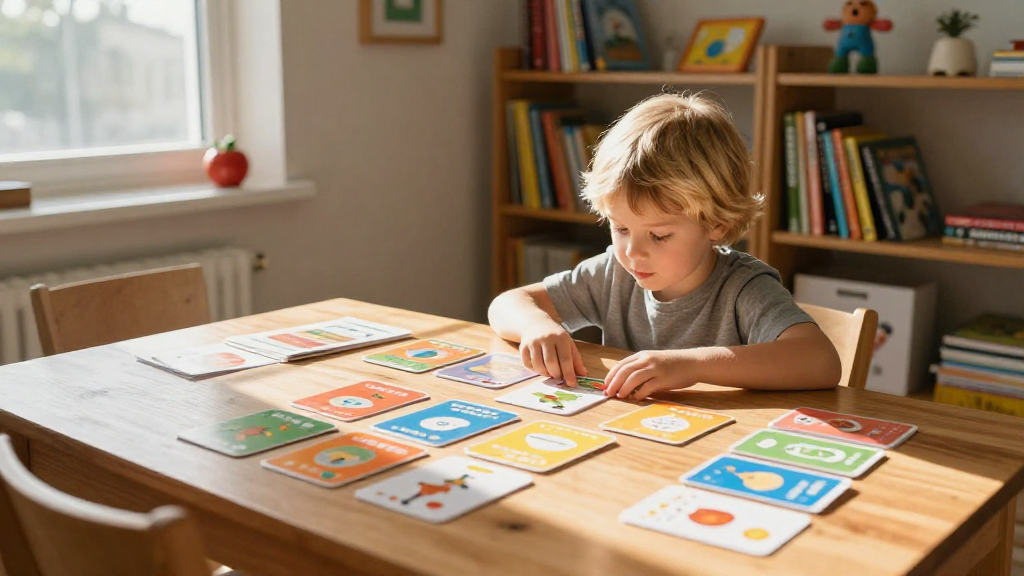
Are you looking for engaging ways to enhance learning?
Discovering how to use cards for learning games can make educational activities fun and interactive.
What Are Learning Cards?
Learning cards are simple tools that can enhance educational experiences.
They can be used independently or combined with games to facilitate various learning objectives.
Learning cards can come in several formats:
- Flashcards: Used for memorization and quick recall.
- Question Cards: Prompt discussions or quizzes.
- Activity Cards: Involve tasks or challenges related to the subject matter.
- Game Cards: Used within structured games to encourage competition or cooperation.
By understanding how to use cards for learning games, you can create dynamic teaching moments that captivate learners of all ages.
Why Are Cards Effective in Learning?
Using cards for learning games can be extremely beneficial for several reasons:
-
Engagement: Cards add a tactile element to learning, making it more engaging.
-
Visual Learning: They provide a visual way to represent concepts, aiding memory retention.
-
Versatility: Cards can be adapted to almost any subject or age group.
-
Collaboration: Many card games promote teamwork and communication skills.
-
Instant Feedback: Cards used in quizzes or games provide immediate feedback, crucial for effective learning.
By integrating the practice of how to use cards for learning games, you can capitalize on these benefits.
How Can You Create Your Own Learning Cards?
Creating your own learning cards can be a fun project! Here’s how you can do it:
Step 1: Identify Your Learning Objectives
Before making your cards, determine what you want to achieve.
This could include:
- Vocabulary building
- Concept reinforcement
- Problem-solving skills
- Test preparation
Step 2: Choose the Format
Decide on the type of cards you’ll create based on your objectives.
For example:
- Flashcards: For definitions or formulas.
- Question Cards: For quizzes or discussions.
- Game Cards: To facilitate an interactive game.
Step 3: Gather Your Materials
You can use simple materials like:
- Index cards
- Cardstock
- Markers
- Stickers
- Pictures or diagrams
Step 4: Craft Your Content
Write concise information on each card.
For example:
-
Flashcard: One side features the word ‘Photosynthesis’, and the other has its definition.
-
Activity Card: “Work with a partner to create a poster about the water cycle.”
Keep your language clear and suitable for your audience.
Step 5: Add Visuals
Consider including images, diagrams, or colors.
Visual elements reinforce learning by providing context.
Step 6: Test and Revise
Once your cards are made, test them out!
Gather feedback and make necessary changes for improvement.
What Types of Games Can You Create with Learning Cards?
Now that you understand how to use cards for learning games, here are a few fun game ideas:
1. Memory Match
How to Play:
- Create pairs of cards with matching terms and definitions.
- Lay them face down and take turns flipping two at a time.
- The player with the most pairs wins.
2. Flashcard Races
How to Play:
- Place flashcards in a pile.
- Set a timer and race to answer as many as possible correctly.
- The player with the most correct answers at the end wins.
3. Trivia Challenge
How to Play:
- Use question cards to prepare trivia questions.
- Divide participants into teams and ask questions.
- Teams earn points for correct answers.
4. Story Building
How to Play:
- Create cards with different characters, settings, and problems.
- Players draw cards and create a story using the elements drawn.
- This promotes creativity and narrative skills.
5. Role-Playing Games
How to Play:
- Use scenario cards to set up role-playing situations.
- Participants act out roles based on the scenarios they draw.
- This is excellent for language learning or social skills development.
By incorporating these games into your lesson plans, you’ll appreciate how to use cards for learning games effectively.
How Can You Adapt Learning Cards for Different Age Groups?
While learning cards are versatile, adapting them for different age groups is essential for maximizing effectiveness.
Younger Children
For younger learners:
- Keep it Visual: Use bright colors and images.
- Simple Tasks: Focus on basic concepts or vocabulary.
- Interactive Gameplay: Create games that involve movement and simple rules.
Adolescents
For older children or teens:
- Increase Difficulty: Use more complex themes and concepts.
- Critical Thinking: Pose challenging questions or scenarios.
- Collaborative Projects: Group cards that encourage teamwork in projects.
Adults
For adult learners:
- Real-World Applications: Incorporate industry-specific terminology or scenarios.
- Debate Cards: Use cards to promote discussions on various topics.
- Goal-Oriented Tasks: Create cards that focus on skill development relevant to professional growth.
By customizing your learning cards, you’ll ensure that how to use cards for learning games resonates across all ages.
Conclusion
Understanding how to use cards for learning games can enrich any educational environment.
Whether for formal schooling or casual home-learning, cards provide a valuable tool for teaching and engagement.
Remember to:
- Adapt your content to suit the learner’s age and comprehension level.
- Regularly update your cards to reflect new information or learning strategies.
- Emphasize fun in learning, creating memorable experiences for all participants.
Now you have the tools and ideas to utilize cards effectively in games, making learning a delightful and productive adventure!
