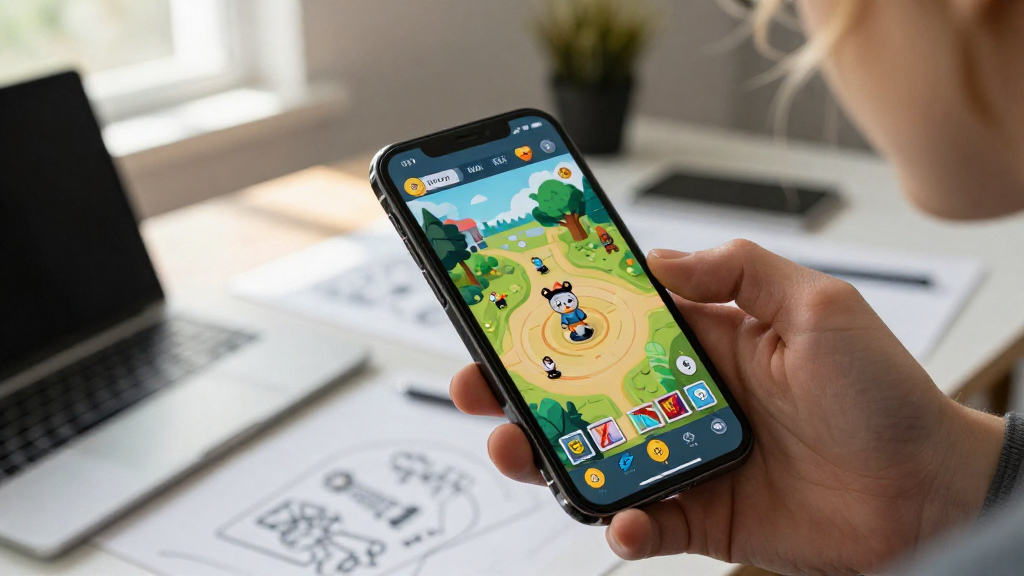
Creating captivating games for mobile devices entails unique challenges and opportunities.
In this guide, we’ll explore how to design a game for mobile successfully, covering everything from initial concepts to user experience and monetization strategies.
What Are the Key Steps in Designing a Mobile Game?
When it comes to how to design a game for mobile, there are several crucial steps to follow:
-
Conceptualization
– Define your game genre (e.g., puzzle, adventure, or RPG).
– Identify the target audience.
– Create a unique selling proposition (USP). -
Storytelling and Characters
– Develop engaging narratives to draw players in.
– Create memorable and relatable characters that add depth to your game. -
Choosing the Right Platform
– Determine whether to develop for iOS, Android, or both.
– Consider cross-platform development tools if you want to reach a wider audience. -
Game Mechanics and Features
– Define gameplay mechanics that are easy to understand but hard to master.
– Incorporate features like in-game currencies or rewards to enhance engagement. -
Designing the User Interface (UI)
– Focus on intuitive navigation.
– Ensure that buttons and controls are appropriately sized for touch screens.
– Use legible fonts and appealing color schemes. -
Graphics and Sound Design
– Invest in high-quality visuals that are optimized for performance.
– Create immersive sound effects and a captivating soundtrack to enhance user experience. -
Testing and Feedback
– Conduct alpha and beta testing to gather user feedback.
– Implement changes based on user experiences to improve gameplay. -
Launch and Marketing
– Develop a pre-launch marketing strategy to build anticipation.
– Use SEO techniques to optimize your game’s online presence. -
Post-launch Support and Updates
– Keep users engaged with regular updates and new content.
– Analyze user data for insights to refine your game further.
Why Is Target Audience Important in Mobile Game Design?
Understanding your target audience is crucial when learning how to design a game for mobile.
Different demographics have distinct preferences:
- Casual gamers often enjoy simple mechanics and quick gameplay.
- Hardcore gamers may look for more complex game systems and depth.
- Age groups can significantly affect design; kids may prefer cartoonish graphics, while adults might lean towards realistic themes.
By conducting thorough market research, you can create personas that represent your ideal players, guiding design decisions and ensuring user satisfaction.
How Do Game Mechanics Influence Player Engagement?
Game mechanics are one of the core pillars of any successful mobile game.
To effectively engage users, consider the following points:
-
Reward System
– Implement a fair and motivating reward system to keep players invested.
– Daily challenges or bonuses can create a reason for players to return. -
Difficulty Levels
– Gradually increase difficulty.
– This encourages players to improve their skills without becoming frustrated. -
Social Features
– Integrating social elements like leaderboards can foster a competitive spirit among players.
– Consider multiplayer modes to increase engagement. -
In-Game Tutorials
– Provide clear in-game tutorials to guide new players.
– Avoid overwhelming them with all mechanics upfront.
What Role Does User Interface Play in Game Design?
The User Interface (UI) is integral to how to design a game for mobile.
An intuitive and engaging UI directly impacts player retention and satisfaction. Here’s how to create an excellent mobile UI:
-
Clarity and Simplicity
– Maintain a clean design that focuses on essential information.
– Minimize clutter to avoid overwhelming players. -
Accessibility
– Implement features like larger touch targets and voice commands.
– Ensure that all users can navigate the game easily. -
Optimization for Screen Sizes
– Design multiple layouts for different screen sizes and shapes.
– Test the game across various devices to ensure a consistent experience.
How Important Is Testing Before Launch?
Testing is a fundamental aspect of mobile game design.
Therefore, it’s essential to understand how to implement it effectively:
-
Alpha Testing
– Conduct internal testing within your development team first.
– It helps identify obvious bugs before any external feedback. -
Beta Testing
– Open the game to a selected group of players to gather broader feedback.
– Look for insights on gameplay, mechanics, and potential improvements. -
Continuous Testing
– Implement analytics tools to track player behavior post-launch.
– Adjust and optimize the game based on user feedback and performance metrics.
What Are the Best Monetization Strategies for Mobile Games?
Monetizing a mobile game can take many forms.
When examining how to design a game for mobile, it’s essential to consider the best strategies to generate revenue:
-
In-App Purchases
– Offer players the option to buy virtual goods or currency.
– This approach allows for ongoing revenue generation well after the initial purchase of the game. -
Ads Integration
– Use rewarded video ads that give players bonuses for watching.
– Display interstitial ads at non-intrusive times, ensuring they don’t disrupt gameplay. -
Freemium Model
– Launch your game for free with basic features, while keeping advanced features behind a paywall.
– This draws in players who might eventually convert to paying customers. -
Subscription Model
– Offer a subscription that provides users with exclusive content.
– This model can create a steady income stream.
Conclusion: Ready to Start Designing?
Now you have a comprehensive understanding of how to design a game for mobile.
From concept to execution, each step requires careful consideration and creativity.
- Emphasize clean UI design, relatable storytelling, and solid game mechanics.
- Don’t forget the importance of testing and post-launch support.
By following these guidelines, you can craft engaging and immersive mobile games that resonate with players and stand out in a competitive market.
Happy designing!
