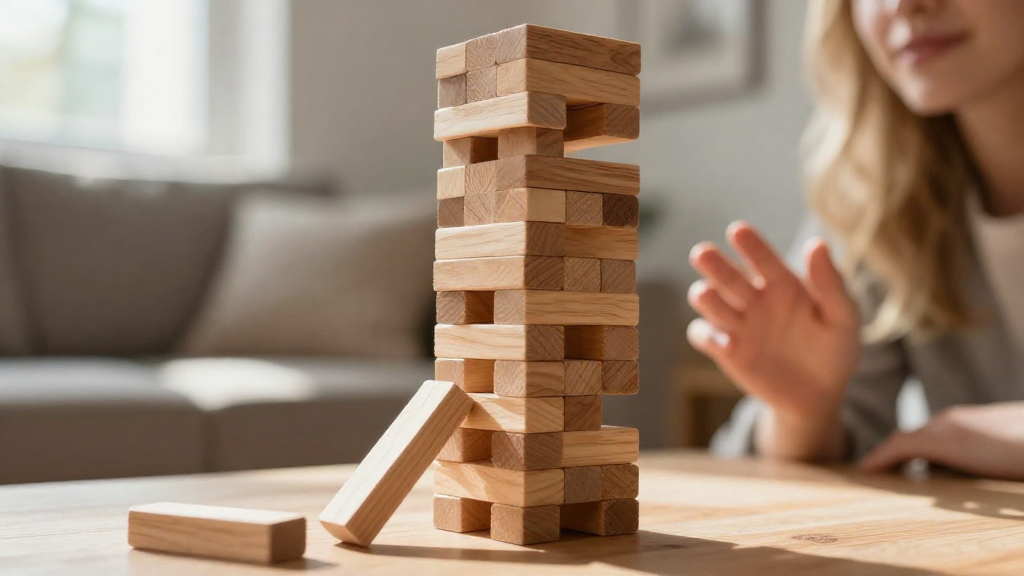
Are you eager to learn how to play Jenga and keep your tower standing tall?
It can be frustrating when the game ends too quickly because of a topple. However, with strategy and skill, you can master the art of Jenga stacking. In this article, we will discuss tips, techniques, and strategies on how to play Jenga like a pro, ensuring that your game nights remain filled with excitement and suspense.
What is Jenga?
Jenga is a popular game played with rectangular wooden blocks.
The objective is simple: remove a block from the tower and place it back on top without causing the entire structure to fall.
The game can be played by two or more players and is often seen as a test of skill, patience, and a steady hand.
How to Play Jenga: What are the Basic Rules?
Before diving into strategies for how to play Jenga without toppling, let’s review the fundamental rules:
-
Setting Up the Game:
– Begin by stacking the blocks into a tower.
– Each layer consists of three blocks placed side by side.
– Alternate the direction of blocks for each layer. -
Taking Turns:
– Players take turns removing one block per turn.
– The block can be taken from anywhere below the highest completed layer.
– Only one hand can be used when taking a block. -
Placing the Block:
– After a block is removed, it must be placed on the top of the tower.
– The game continues until the tower falls. -
Winning the Game:
– The last person to successfully place a block without causing the tower to collapse is the winner.
How Can You Ensure the Tower Doesn’t Fall?
By implementing strategic techniques, you can improve your gameplay significantly. Here are several tips on how to play Jenga without toppling:
1. Assess the Structure
Evaluate the stability of the tower before making your move.
- Look for:
- Loose blocks
- Any uneven layers
- Areas where other players have previously removed blocks
2. Choose Your Blocks Wisely
Not all blocks are created equal.
- Focus on the Center:
-
Removing blocks from the center of lower layers can often help in maintaining balance for the upper layers.
-
Avoid the Top:
- Target lower blocks first; a lower removal tends to be less risky.
3. Use a Gentle Touch
When handling the blocks, consider the following:
- Slow Movements:
-
Quick actions can cause vibrations, making the tower unstable.
-
Minimal Force:
- Apply just enough pressure to slide the block out without disturbing the others.
4. Plan Ahead
Before making your move, anticipate the repercussions:
- Visualize Your Next Move:
- Think about how your current block removal will affect future turns.
- Always consider where you will place the removed block.
5. Practice Steadiness
Balancing Jenga requires a steady hand to maintain control.
- Stabilize Your Grip:
-
Use both hands to help stabilize the tower while removing a block, but remember, only one hand can be used to make the actual removal.
-
Breathing Techniques:
- Take a deep breath to help calm your nerves during critical moments.
6. Adapt Your Strategy
Flexibility is key while playing Jenga.
- Watch the Player Trends:
-
Pay attention to how other players are removing blocks and adapt your strategy accordingly.
-
Bracing Techniques:
- If you notice the tower is becoming unstable, consider supporting the structure by using your body posture.
How Do You Keep Track of Player Moves?
Keeping track of moves will enhance your ability to predict the tower’s stability:
- Memory:
-
Remember which blocks have been removed from the tower and their positions.
-
Observation:
- Watch other players closely. Take note of their preferences for which blocks to remove.
7. Play Offensively and Defensively
In Jenga, your moves can impact not only your gameplay but also that of others:
- Disrupt Opponents:
-
You can make it difficult for your opponents by removing blocks in a way that makes it harder for them to find stable options.
-
Create Opportunities:
- Strategically remove simpler blocks, opening up a path for your next move.
Can You Improve Your Jenga Skills Over Time?
Absolutely! The more you play Jenga, the better you will get.
Here are a few tips for ongoing improvement:
- Play Different Styles:
-
Experiment with different strategies and styles to see what works best for you.
-
Community Challenges:
-
Join local game nights or participate in Jenga tournaments to test your skills against others.
-
Review Videos:
- Watch expert players on platforms like YouTube to gather insights and tips on their techniques.
Why is Practicing Jenga Important?
Regular practice can yield significant benefits in gameplay:
- Strategy Development:
-
As you play more, you will develop your own effective moves and strategies.
-
Skill Refinement:
- Your coordination and hand-eye skills will improve, making you a formidable player.
Conclusion
Learning how to play Jenga without toppling involves not just knowing the rules, but also understanding the strategies that can help you succeed.
By assessing the structure, choosing blocks wisely, using a gentle touch, and staying practiced, you can keep that tower standing for as long as possible.
Most importantly, enjoy the game! Jenga is all about fun, laughter, and friendly competition.
So, gather your friends, and put your new skills to the test. Who knows, you might just become the Jenga champion of your group!
