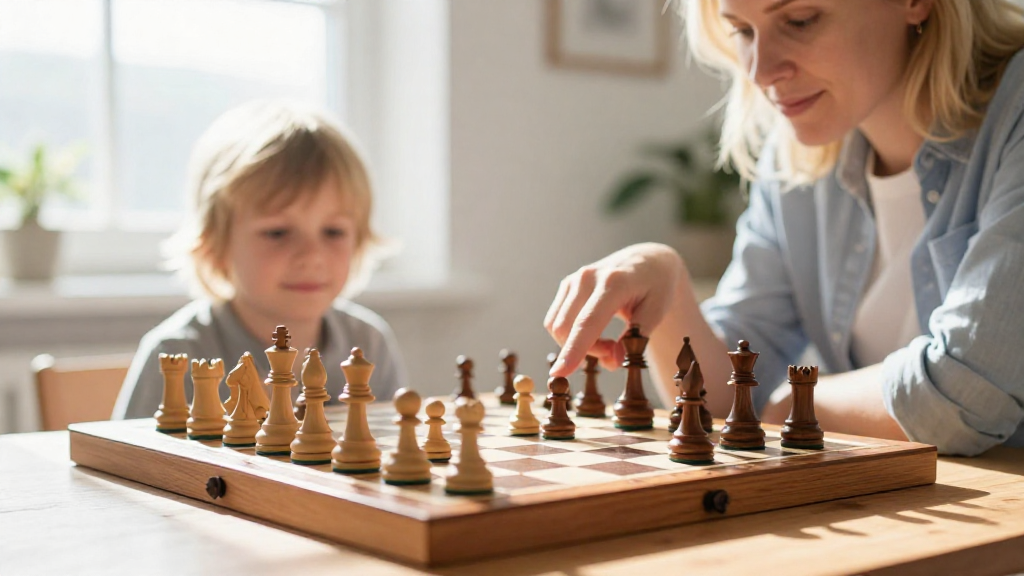
Teaching kids chess can be both an enjoyable and rewarding experience.
This ancient game not only enhances strategic thinking but also fosters patience, discipline, and problem-solving skills in young minds.
In this article, we will dive into how to teach kids chess step by step, providing you with effective strategies, engaging activities, and helpful tips.
Why is Chess Good for Kids?
Chess offers numerous benefits to children, such as:
– Improving cognitive skills: It boosts memory, attention span, and critical thinking.
– Enhancing social skills: Children learn to interact, share, and practice sportsmanship.
– Building emotional intelligence: Playing chess teaches kids to handle wins and losses gracefully.
– Fostering creativity: The game encourages imaginative thinking as kids create their own strategies.
Understanding these benefits will motivate you to effectively teach your child the game.
How to Teach Kids Chess: Step 1 – Introduce the Game
Before diving into the rules, it’s important to create an interest in chess. Here are some methods to introduce the game:
– Watch online videos or tutorials: There are many engaging chess videos tailored for kids.
– Play chess-themed games: Consider educational chess apps or board games that familiarize kids with basic moves.
– Share fun chess stories: Present chess books or cartoons that tell captivating tales related to the game.
What Are the Basics of Chess?
Familiarize your child with the basic elements of chess, including:
– The Chessboard: Explain the 64 squares comprising an 8×8 grid, alternating between light and dark colors.
– Chess Pieces: Introduce the six types of pieces: pawns, knights, bishops, rooks, queens, and kings.
– Starting Position: Show how pieces are arranged at the beginning of the game.
How Do the Chess Pieces Move?
One of the key aspects of how to teach kids chess is breaking down the movement of each piece:
– Pawns: Move forward one square, but attack diagonally.
– Knights: Move in an ‘L’ shape (two squares in one direction and one square perpendicular).
– Bishops: Move diagonally any number of squares.
– Rooks: Move vertically or horizontally any number of squares.
– Queens: Move diagonally, vertically, or horizontally any number of squares.
– Kings: Move one square in any direction.
Now that you’ve covered movement, practice with your child by moving pieces around the board.
How to Teach Kids Chess: Step 2 – Explaining the Objective
Explain the primary goal of chess:
Checkmate: The objective is to checkmate your opponent’s king, meaning the king is under attack and cannot escape capture.
Why is Checkmate Important?
Understanding checkmate helps kids grasp the essence of the game. Scenarios to discuss include:
– The difference between check and checkmate: Explain that check means the king is in danger, while checkmate ends the game.
– Valuable tactics: Teach concepts like pinning, skewering, and fork attacks. Using examples will deepen their understanding.
How to Teach Kids Chess: Step 3 – Teaching Basic Tactics
This step can be encapsulated in key tactical concepts that kids should grasp:
– Controlling the Center: Explain that controlling the center of the board gives better mobility and control.
– Piece Development: Encourage kids to develop their pieces (move them from their starting positions) early in the game.
– King Safety: Teach the importance of castling to keep the king safe and connect the rooks.
Always illustrate these tactics with simple examples and exercises where your child can practice them effectively.
How Can Kids Practice Chess?
Practicing chess is crucial for the child’s growth in the game. Here are several ways to facilitate practice:
– Play with Family Members: Regular games with family can enhance learning.
– Join a Chess Club: Encourage your child to meet peers who share the same interest in chess.
– Online Platforms: Websites such as Chess.com or Lichess offer children-friendly environments to practice and play against others.
– Chess Puzzles: Use interactive chess puzzles available in apps or books to improve tactical awareness.
How to Teach Kids Chess: Step 4 – Encouraging Skill Development
Foster skill development by focusing on the following areas:
– Review Games: After every game, discuss moves and decisions to understand mistakes and successes.
– Watch Professional Matches: Observe how experts play and discuss strategies with your child afterward.
– Set Goals: Encourage your kids to set achievable goals related to chess, such as improving their rating on a chess platform or learning a specific opening.
What Resources Can Assist in Learning Chess?
To efficiently teach kids chess, leverage these great resources:
– Books: Look for beginner-friendly chess books aimed at kids. Titles like “Chess for Kids” by Michael Basman are excellent.
– Videos: Use platforms like YouTube for engaging tutorials and match analyses tailored for young learners.
– Apps: Educational chess apps designed for kids can reinforce learning through games and puzzles. Some popular ones include “ChessKid” or “DigiChess”.
How to Teach Kids Chess: Step 5 – Cultivating a Positive Learning Environment
Creating a supportive atmosphere is essential for effective learning. Promote a positive mindset through:
– Encouragement: Always praise effort and improvement, rather than just winning.
– Patience: Chess is challenging, so being patient during learning helps reduce frustration.
– Fun: Incorporate playful elements in your lessons. Play variant games like Bughouse or Chess960 for excitement.
Final Thoughts on How to Teach Kids Chess
Teaching kids chess is an enriching endeavor that promotes crucial life skills.
By following these outlined steps—introducing the game, explaining objectives, covering tactics, and creating a supportive environment—you can foster a love for chess in your child.
Chess is not just a game; it’s a dynamic tool that helps develop future thinkers.
Whether you’re a novice or experienced player, your enthusiasm will ignite their love for chess.
So go ahead, gather the chess pieces, and dive into the fascinating world of chess together!
