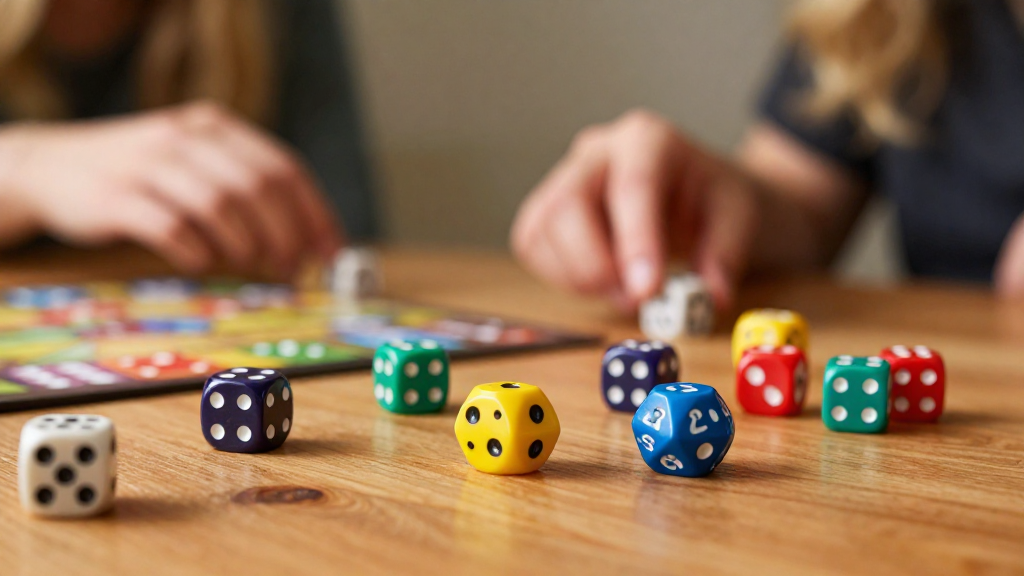
Understanding how to use dice in different games can elevate your gaming experience and make each game more enjoyable.
Whether you’re playing a traditional board game or embarking on a complex role-playing adventure, dice can add an element of chance, strategy, and excitement.
In this article, we’ll explore how dice are utilized across various games, tips for choosing the right dice, and some popular games that rely heavily on these captivating little cubes.
What Are Dice and Why Are They Important?
Dice are small, typically cube-shaped objects used in games to generate random numbers.
Their primary function is to introduce luck into gameplay, making each roll unique and influential.
Types of Dice
-
Standard Six-Sided Dice (D6): The most common type, used in classics like Monopoly and Yahtzee.
-
Polyhedral Dice: Often used in role-playing games (RPGs), these include different-sided dice, like:
– Four-sided (D4)
– Eight-sided (D8)
– Ten-sided (D10)
– Twelve-sided (D12)
– Twenty-sided (D20)
How to Use Dice in Different Games: Board Games
What Are Some Popular Board Games That Use Dice?
Board games have been utilizing dice for generations.
Here are a few popular examples:
- Monopoly: Players roll two D6 dice to determine their movement around the board. Rolling doubles allows them to take an extra turn.
- Risk: Dice are used to determine the outcome of battles. Players roll various dice depending on the number of armies they have available for attack or defense.
- Catan: Dice rolls determine the resources players receive, adding a strategic layer to positioning settlements.
Tips for Using Dice in Board Games
- Understand the Game Rules: Each game has unique ways to utilize dice. Familiarize yourself with how to roll, whether you can reroll, and what the results mean.
- Keep Track of Rolls: In games like Monopoly, tracking rolled numbers can help you strategize your next move.
- Use Dice Rolls for Strategy: In games with multiple paths to victory, consider how a roll can impact your potential moves.
How to Use Dice in Different Games: Role-Playing Games (RPGs)
How Do RPGs Incorporate Dice Mechanics?
RPGs often rely heavily on dice for storytelling and combat mechanics.
Players must learn how to use dice in different games like Dungeons & Dragons or Pathfinder to create thrilling narratives.
Common RPG Dice Mechanics
- Character Creation: Players often roll dice to determine their characters’ abilities and traits.
- Combat Rolls: Attack rolls and damage rolls frequently utilize D20s alongside other polyhedral dice for outcome determination.
- Skill Checks: Players roll specific dice to determine the success rate of in-game actions, like convincing an NPC or disarming a trap.
Tips for Using Dice in RPGs
- Know Your Dice: Each die type has a specific role. Understand how and when to use them effectively.
- Practice Rolling: Accuracy in rolling can impact gameplay. Consider how environmental factors (like table surface) can affect your rolls.
- Discuss with Your Group: Use dice rolling as a community-building tool. Share perspectives on outcomes, enhancing the collaborative nature of RPGs.
How to Use Dice in Different Games: Casual Games and Party Games
Which Casual Games Use Dice for Fun?
Casual games and party games often rely on simple dice mechanics for fast-paced fun. Some examples include:
- Liar’s Dice: A bluffing game where players roll in secret and wager on the total number of dice showing certain values.
- Farkle: Players roll dice trying to score points by achieving certain combinations, with the decision to bank points or continue rolling lending an exciting risk element.
- Zombie Dice: A game of push-your-luck where players roll dice to collect brains while avoiding shots from the shotgun.
Tips for Using Dice in Casual Games
- Keep It Light: Engage in friendly banter while rolling dice; this can enhance the overall experience.
- Explore Variations: Consider introducing new rules or variations to keep games lively and fun.
- Encourage Team Play: In party settings, utilize teams that can strategize based on dice rolls, promoting interaction among players.
How to Use Dice in Different Games: Educational and Training Games
How Can Dice Help in Learning?
Dice can also serve educational purposes. They can be integrated into learning tools and games to make subjects like math engaging.
Examples of Educational Games Using Dice
- Math Dice: Players roll dice to generate numbers and create equations. This encourages quick thinking and problem-solving.
- Counting Games: Young learners can use dice to practice counting or addition.
- Language Games: Players can use dice to roll numbers corresponding to vocabulary words, enhancing language skills.
Tips for Using Dice in Educational Settings
- Create Challenges: Set goals based on dice thresholds to motivate students.
- Interactive Lessons: Use dice rolls to shape the direction of lessons for increased engagement.
- Encourage Group Activities: Foster collaboration through group learning games that incorporate dice.
Final Thoughts: Mastering How to Use Dice in Different Games
Understanding how to use dice in different games can greatly enhance your gaming experiences.
From board games and RPGs to casual and educational formats, the ability to strategize around dice rolls can transform your gameplay.
- Remember to familiarize yourself with each game’s rules regarding dice.
- Use the various types of dice effectively to maximize your chances of success.
- Lastly, embrace the randomness and fun that dice bring to any game!
By mastering these elements, you’ll be well on your way to becoming a proficient dice user in your gaming adventures. Happy rolling!
